Gods and Scale Beyond Human
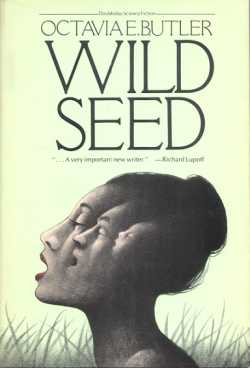
Wild Seed is fundamentally about gods—or rather, about what happens when beings transcend human limitations and operate at scales beyond human concern. Butler explores what becomes possible when you can treat humanity as a project to be managed toward certain results. There’s an uncomfortable parallel here to today’s tech billionaires, who similarly operate at god-scale, seeing themselves as grand figures in history while becoming disconnected from human life in fundamental ways.
Anything that gets in the way of the project or plan for a greater world becomes irrelevant. The extraordinarily wealthy exist in a different world, thinking on different timescales and seeing individual lives as statistics rather than as people.
Doro’s State Logic vs. Anyanwu’s Cultural Institution
Doro operates with what James C. Scott would call “state legibility”—he sees populations, not people. He reduces complex human communities into breeding lines and genetic optimization metrics, treating humans as objects to fit into a bureaucratic system. His approach is fundamentally statistical, trying to manage human complexity through abstract categories and averages.
But there’s a fatal flaw in this approach: the “average man” doesn’t exist. Treating things statistically simply doesn’t work when dealing with actual human beings. Doro’s program fails because it treats human complexity as noise to be eliminated rather than as the substance of what makes people powerful and creative.
This is why he needs Anyanwu’s alternative perspective. While Doro flattens subjective experience into data points, Anyanwu builds Canaan as a different kind of institution—one fundamentally about retaining subjective experience, preserving how people actually experience, interpret, and relate to the world. Her approach works with the grain of actual human variability rather than forcing people into abstract categories.
Power Differentials and Resistance
The novel is brutally honest about power differentials. When facing someone with immense power and influence, you can’t have power over them—you can only try to have power with them. Anyanwu doesn’t mount an effective resistance that changes or restricts Doro’s plan. Instead, she softens its impact, creates pockets of gentleness within an oppressive system.
Her plantation becomes a temporary refuge, but Doro’s larger project continues. The question becomes: what can you preserve or create within impossible constraints? Anyanwu can’t overthrow Doro, but she can build Canaan. She can refuse to let his breeding program be the only model. She creates alternatives that survive even when she can’t.
Shapeshifting as Ecological Embeddedness
Anyanwu’s transformative power is crucial to understanding her resistance. Unlike Doro, who is always just Doro, she has the capacity to absorb and live as entirely different creatures. This access to the non-human world feels essential to maintaining her humanity.
There’s a connection here to Donna Haraway’s ideas about companion species and multispecies relationships, contrasted against Christian European notions of dominion over the Earth. Doro embodies that dominion model, while Anyanwu practices something closer to living with, connecting to the non-human world in ways that debunk the sense of mastery and higher life forms. She regrounds herself in ecology and interconnection.
Her shapeshifting isn’t about transcending biology but about deepening into it—becoming more embodied, not less. She learns from the dolphin’s navigation, the leopard’s hunting, different human ways of being. She literally takes viruses and poisons into her system to better understand them. She embodies knowing itself, incorporating threats rather than just fighting them off. This is resilience as negotiation and integration rather than warfare.
Their different approaches to “lesser” life forms reveal fundamentally different worldviews: community and being part of versus dominion over.
The Patronage Problem and Creative Labor
There’s a personal resonance here around creative labor and access to resources. The novel’s power dynamics echo the ways it’s so hard to be a creative worker without access to generational wealth. Opportunities to make money are limited, windows exist briefly, and so much depends on patronage relationships where the patron controls the terms completely while providing resources.
Doro functions as that immortal patron who provides resources but maintains total control. Anyanwu has to constantly negotiate for any autonomy within that relationship. Butler herself understood these constraints, writing from a working-class background while working warehouse jobs to develop her craft. The novel reflects the reality that creative independence without wealth is always precarious negotiation.
Revolutionary Change vs. Incremental Progress
One of the constant struggles the novel addresses is the question of revolutionary change versus incremental progress within fundamentally broken systems. I want to believe in the possibility of systems change, but it’s often not possible—except when it is. The impossibility is knowing when it’s possible.
Butler refuses a clean utopian resolution. The novel ends with a carefully negotiated truce where Anyanwu accepts Doro while knowing he remains awful. Canaan eventually fails, but it creates ripple effects. There’s something deeply honest in this pessimism about perfection combined with optimism about incremental change.
The second novel apparently shows that Doro’s breeding program eventually produces the breakthrough that breaks his hold and creates a new regime. There’s a Frankensteinian irony here: Doro becomes the architect of his own undoing through the very system he created for control. Perhaps only through Doro’s program is it possible to create the seeds that ultimately overthrow him.
This connects to Deleuze and Guattari’s ideas about how any system of control inevitably produces something that slips away, producing resistance that may eventually rupture the system and become its own regime of control—a constant flow between regimes.
Acting As If Change Is Possible
This tension recalls Angela Davis’s insight: you have to act as if it’s possible to radically change the world, and you have to do it every day. Because you cannot know when conditions will shift. There’s also that Octavia Butler quote I’ve long kept in my email signature about how predictions of a doomy future are more a product of depression than anything real about the future, because the truth is the future is unknowable.
Wild Seed embodies this perfectly. Anyanwu builds Canaan knowing it might fail, maintains her cultural practices across centuries, shapes her children toward freedom—all without knowing whether it will matter. But those actions create the conditions for whatever comes next.
Butler refuses both naive optimism and fatalistic pessimism. It’s pragmatic hope: do the work, plant the seeds, because you literally cannot know what will grow.
Canaan as Pragmatic Self-Preservation
Anyanwu’s creation of Canaan isn’t purely idealistic—it’s deeply practical and pragmatic. She builds what she needs to feel comfortable and whole. It’s strategic self-preservation that happens to create space for others too.
This is more honest than many organizing narratives that start with abstract ideals. Anyanwu starts with what she actually needs to survive—fair treatment, healing work, acceptance of difference—and builds outward from there. Her experiment meets people’s immediate needs now rather than waiting for some future revolution.
Contemporary dialogue around self-care and mutual aid connects here: building the world you want to see while also providing concrete survival resources.
Ideas as Metabolic Process
The novel connects to my project work around memetics—how ideas can appear to be one thing and then transform into something else once people internalize them. The project is fundamentally about different levels of meaning, how things spread, and the dangers of ideas you don’t completely understand coming into your system.
There’s also something here about form itself and McLuhan’s “Understanding Media.” How does form impact reception? What is the contemporary meme format doing, and how does it pave the way for certain things to insert themselves in your mind that you may not be aware of when you look at the meme? We’re in a phase where memes have become a trajectory for radicalization—the form itself becomes a delivery mechanism that bypasses conscious analysis, creating emotional attachment before people realize what they’ve absorbed.
This loops back to Butler: benevolent forms can mask extractive content until people are already embedded in systems of control.
Final Thoughts
Wild Seed refuses easy answers while maintaining that struggle matters. It’s honest about power, pragmatic about resistance, and insistent that building alternatives—even temporary, imperfect ones—creates possibilities we cannot predict. The future remains unknowable, which means we must act as if change is possible, every day, even when we cannot see the path forward.